The Bridges
Bridges are powerful symbols of connection, understanding, and reconciliation.
They link not only physical spaces but also generations, cultures, and communities, reminding us of shared histories and collective futures.
Through these bridges, we explore unity, dialogue, and the enduring human desire to come together across divides, celebrating both diversity and common ground.
Gorica Bridge
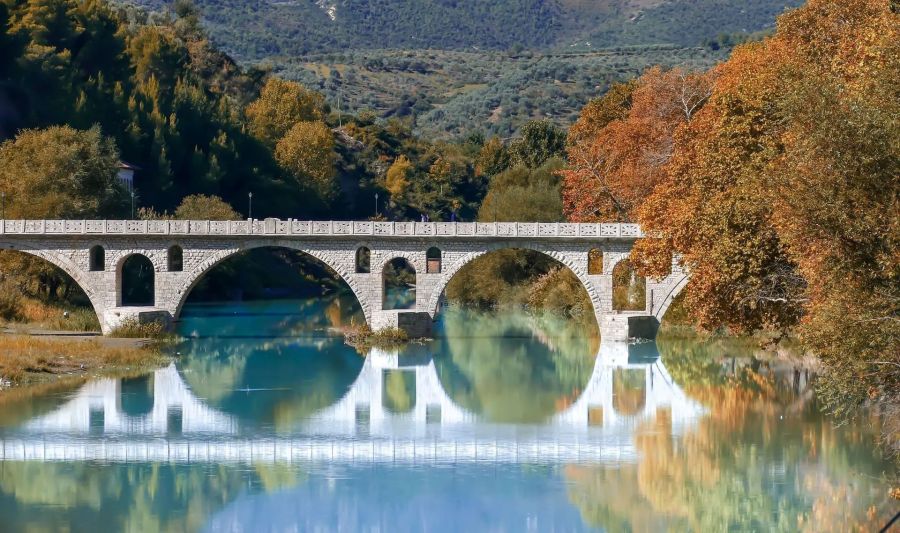
Berat, often called “the City of a Thousand Windows,” is one of Albania’s most picturesque and historic cities.
Recognized by UNESCO as a World Heritage Site, it is famous for its white Ottoman houses that seem to rise one above another along the hillside.
The city reflects a rich blend of cultures, history, and religion. Among its landmarks, the Gorica Bridge gracefully spans the Osum River, connecting the old neighborhoods of Mangalem and Gorica and symbolizing the unity and harmony of Berat.
Old Bridge of Mostar
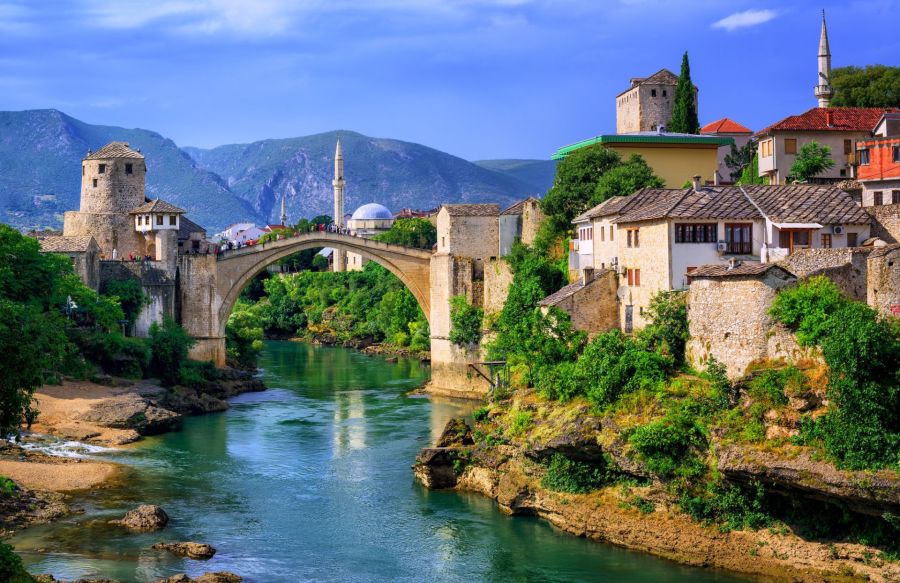
Stari Most, the Old Bridge of Mostar, is Bosnia and Herzegovina’s most iconic landmark.
Built in 1566 by Ottoman architect Mimar Hayruddin, it united the city across the Neretva River for centuries as a symbol of cultural harmony.
Destroyed in 1993 and rebuilt in 2004 using traditional methods, it stands as a testament to resilience and unity.
Now a UNESCO site, it remains a living emblem of hope and courage.
Stone Bridge - Prizren
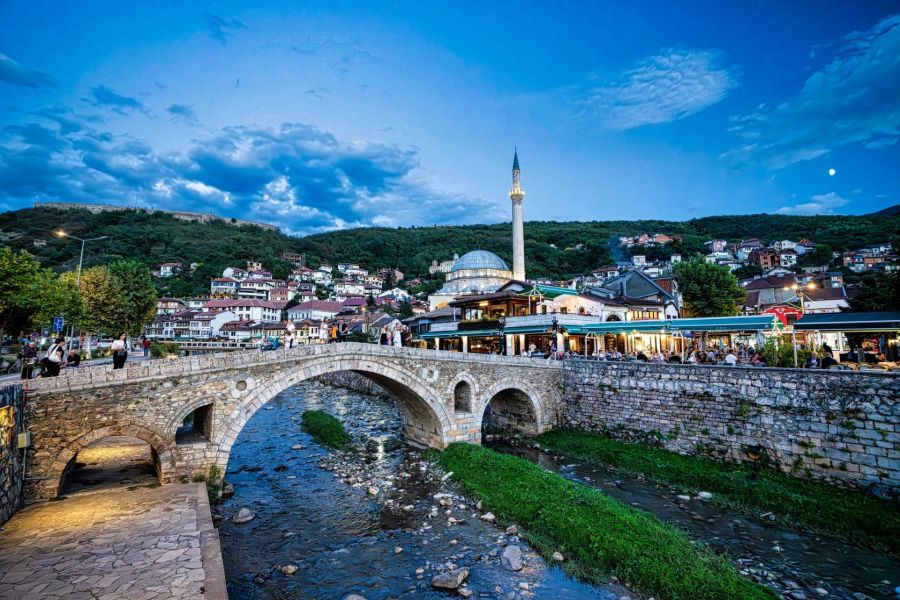
The Stone Bridge (Ura e Gurit) in Prizren, Kosovo, is a 15th-century Ottoman landmark spanning the Bistrica River.
Built of stone with three arches, it once linked key trade routes and the city’s north and south.
Damaged by floods and war, it was rebuilt in 1982, preserving its charm.
Surrounded by mosques and cobbled streets, it remains a glowing symbol of Prizren’s unity, heritage, and resilience.
Stone Bridge - Skopje
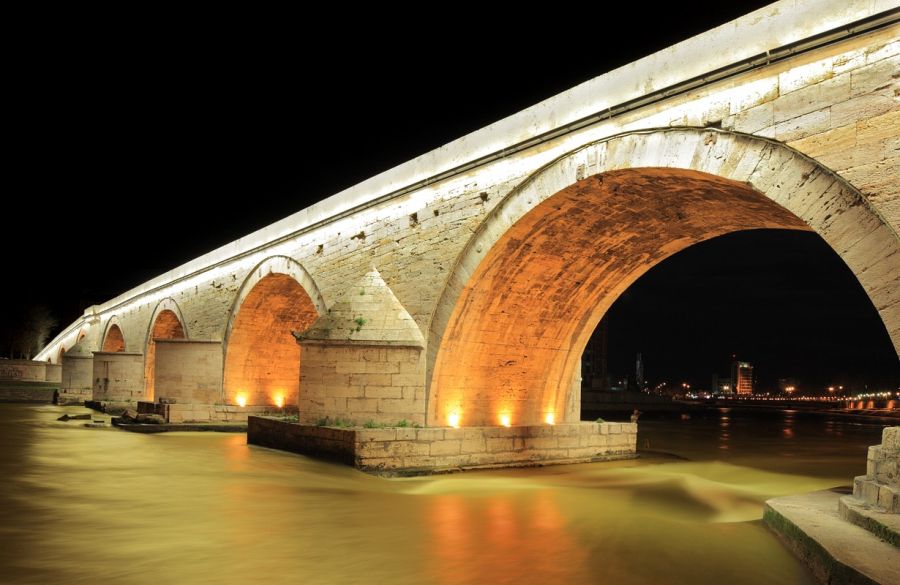
The Stone Bridge, Skopje’s iconic symbol, was built in the 15th century under Sultan Mehmed II, though parts may date to Sultan Murad II.
Spanning 220 m over the Vardar River with 13 arches of carved travertine, it features Ottoman rosette motifs.
Excavations show an earlier 6th-century bridge from Emperor Justinian’s time.
Restored between 1992–2004, it now shines again as a proud link between past and present.
Hadži-Pasha Bridge
The Hadži-Pasha Bridge, the oldest in Podgorica, was rebuilt in the 18th century by governor Hadži Pasha Osmanagić on ancient Roman foundations by the Ribnica river.
Once part of the trade route through Birziminium, legend says Romans buried a golden coin beneath it for luck.
Destroyed in the 1618 quake, it was later revived in stone.
Locals call the area 'Skaline', and lovers believe vows made here last forever.
White Bridge / Bridge of love
The White Bridge in Vranje, seen from the Amam toward the Vranje River, is a beloved town symbol featured on its coat of arms.
A legend tells of Aisha, a Turkish girl, and Stojan, a Serbian shepherd, whose forbidden love ended tragically: Aisha was killed protecting Stojan, who then took his own life, leaving their story forever linked to the bridge.
Below this text, another inscription in Arabic says:
"Oh, Guardian, the owner of this goodness and beauty, lady Aisha, builds this bridge so that God can forgive her sins and the sins of her parents"